What Do You Actually Need to Run an Affiliate Program? A Beginner’s Checklist

Starting an affiliate program is easy to describe: other people recommend your product, and you pay them a commission when their referrals buy.
Actually launching one requires a few more decisions.
You need an offer worth promoting, a commission structure that still leaves enough margin, a way to identify each affiliate, reliable sales tracking, payout rules, onboarding instructions, promotional resources, and a process for handling refunds and attribution questions.
The good news is that a beginner does not need an enterprise partner-management operation. You just need to prepare the essential pieces in the right order.
Affiliate Program Checklist for Beginners
Use this checklist before inviting your first affiliate. It is designed for creators, freelancers, course sellers, digital-product businesses, and small online businesses launching a program for the first time.
Offer → Commission → Rules → Signup → Tracking → Resources → Test → Recruit → Pay → Improve
Affiliate Program Checklist for Beginners: What You Need Before Launch
You can divide the work into four areas:
- Offer: what affiliates will promote and why customers would buy it;
- Economics: commission, refunds, payout timing, and profitability;
- System: signup, affiliate links, tracking, dashboard, and payments;
- Enablement: onboarding, promotional resources, communication, and support.
Getting these basics right is more useful than launching with dozens of advanced features you do not yet need.
1. Choose the Product Affiliates Will Promote
Do not begin with the affiliate software. Begin with the offer.
An affiliate can send traffic, but the product still needs a clear buyer, useful outcome, sensible price, and credible sales page. If the offer itself is confusing, adding affiliates multiplies the confusion.
Before moving on, confirm:
- the product is ready to sell;
- the target customer is clear;
- the sales page explains the offer;
- checkout works;
- delivery or access works after payment;
- refund terms are defined.
If you have several products, start with one or a small related group rather than asking new affiliates to understand your entire catalog.
2. Decide Who You Want as Affiliates
“Anyone with a link” is not a recruitment strategy.
Think about who already reaches the kind of customer who needs your product. Depending on the offer, that could include bloggers, YouTubers, newsletter publishers, educators, consultants, existing customers, complementary service providers, or niche creators.
Write a simple affiliate profile:
Example: “Creators who teach freelancers how to organize client projects” is more useful than “people interested in business.”
This decision later helps you create better recruitment copy and promotional resources.
3. Calculate a Commission You Can Sustain
A high commission can attract attention, but it still has to fit the economics of the product.
Start with the money that remains after relevant costs rather than copying another company’s percentage.
Sale Price − Relevant Costs − Affiliate Commission = Remaining Contribution
Consider payment processing, support, delivery costs, refunds, taxes where applicable, and any other costs relevant to your business.
For a recurring product, also decide whether commission applies only to the first payment or to recurring payments. Your affiliate system needs to support the structure you promise.
4. Set a Minimum Payout and Payout Schedule
Affiliates need to know when they can expect payment.
Decide:
- whether you have a minimum payout threshold;
- how often payouts are processed;
- which payment methods are supported;
- what information an affiliate must provide before payment;
- what happens to small balances that have not reached the threshold.
Write this down before recruitment so you are not inventing a different rule for each affiliate.
5. Match the Payout Delay to Your Refund Policy
A sale and a payable commission do not necessarily need to happen at the same moment.
If customers have a refund period, paying the affiliate immediately can create reconciliation work if the transaction is later refunded.
A payout delay gives the sale time to clear the relevant period before the commission becomes payable.
Check: Refund policy → commission eligibility → payout delay → payout date should make sense together.
6. Define Your Attribution Rules
This sounds technical, but beginners should decide it before two affiliates claim the same customer.
Attribution answers the question:
Which affiliate receives credit for a sale?
Your platform determines how referrals are tracked, but you should understand its behavior and communicate any rules that affiliates need to know.
Test scenarios such as:
- a visitor clicks an affiliate link and buys immediately;
- a visitor clicks and buys later;
- a customer encounters links from two affiliates;
- a visitor moves between your content page and checkout;
- a customer requests a refund.
You do not need to invent your own tracking technology. You do need to know how the technology you choose behaves.
7. Prepare the Affiliate Terms
A simple program still needs rules.
Your terms should cover the areas relevant to your business, such as:
- commission eligibility;
- payout schedule;
- refunds and chargebacks;
- prohibited advertising methods;
- brand and trademark use;
- misleading claims;
- self-referrals if applicable;
- coupon or paid-ad restrictions if applicable;
- termination of participation.
The exact legal requirements vary by jurisdiction and business model, so use appropriate professional guidance where necessary. The practical point is to avoid running a program based entirely on unwritten assumptions.
8. Create an Affiliate Signup Page
Give prospective affiliates one clear place to understand and join the program.
The page does not need to be long. It should answer:
- What are they promoting?
- Who is the product for?
- What commission can they earn?
- When are commissions paid?
- How do they join?
- Where can they find the rules?
This page also becomes useful when you recruit affiliates directly. Instead of explaining the entire program in every message, you can send one consistent resource.
9. Make Sure Every Affiliate Gets a Unique Tracking Link
This is one of the jobs that should not depend on your memory.
Each affiliate needs an identifiable link so referrals can be attributed correctly. The system should generate or associate a unique affiliate ID with the partner.
For a tiny program, manually sending links may seem manageable. A better setup lets the system provide the correct link as part of onboarding.
Check: Can a new affiliate join today and receive the correct tracking information without you manually editing a URL for them?
10. Give Affiliates Access to Their Results
If affiliates cannot see anything, they may repeatedly ask you whether their link is working.
A useful affiliate dashboard can provide visibility into referrals, sales, and commissions according to the platform’s reporting capabilities.
This is not only convenient for affiliates. It reduces administrative questions for the program owner.
11. Build a Simple Affiliate Onboarding Process
Do not make someone join and then figure everything out alone.
A beginner onboarding sequence can be very short:
- Welcome them to the program.
- Give them their affiliate link and dashboard access.
- Link to the program terms.
- Explain the product and target buyer.
- Provide promotional resources.
- Tell them where to ask questions.
You can send this in one organized welcome email or a short sequence.
12. Create an Affiliate Resource Kit
Your affiliates should not have to guess how to describe the product.
A useful starter kit can include:
- a short product description;
- target-customer description;
- key benefits;
- approved product images;
- screenshots or demonstrations;
- FAQ;
- tutorial links;
- sample email angles;
- social-post ideas;
- important claims or promotional restrictions.
A resource kit improves consistency, but avoid forcing every affiliate to publish identical copy. Their own voice and audience knowledge are part of the reason you recruited them.
13. Decide How You Will Communicate With Affiliates
Affiliate communication continues after signup.
You may need to tell partners about product updates, new promotional resources, price changes, launches, campaign dates, or changes to program terms.
Choose a primary communication channel. For many small programs, email is enough.
It also helps to identify affiliates separately from normal customers or newsletter subscribers so you can send program-specific communication to the correct group.
14. Test the Entire Affiliate Journey Yourself
Do not test only the signup form.
Act like an affiliate and then act like a customer.
- Join through the affiliate signup process.
- Receive or retrieve the affiliate link.
- Open the link in a clean browser session.
- Visit the sales page.
- Complete a test purchase using an appropriate test method.
- Check whether the sale is attributed correctly.
- Verify the commission amount.
- Check the commission status and payout timing.
- Verify what the affiliate can see in the dashboard.
If you change domains, checkout pages, funnels, redirects, or major tracking settings later, test again.
15. Check the Actual Product-Level Commission
Do not assume a general commission setting automatically means every offer is configured exactly as intended.
This matters in Systeme.io specifically: its current documentation notes that a newly created order form starts with an affiliate commission of 0%, so the offer’s commission setting should be checked before launch.
This is exactly the kind of small configuration detail that is easier to catch with a checklist than after an affiliate has already sent a customer.
16. Decide How Affiliate Payouts Will Be Processed
Before launch, know what happens between “commission recorded” and “affiliate receives money.”
Ask your software:
- Does it calculate commissions?
- Does it generate payout records or invoices?
- Can it connect to a payment service?
- Does the owner still need to approve or trigger the payment?
- What information must the affiliate provide?
Do not use “automatic payouts” as shorthand for a completely hands-off process unless that is genuinely how the platform works.
17. Start With a Small Affiliate Group
You do not need one hundred affiliates on launch day.
A small first group makes it easier to discover:
- questions your signup page did not answer;
- resources affiliates actually request;
- tracking problems;
- confusing program rules;
- which promotional angles resonate with customers.
Fix those issues before aggressively expanding recruitment.
18. Decide What You Will Measure
Do not judge the program only by the number of people who register as affiliates.
A large inactive affiliate list may produce very little.
Useful operational measures can include:
- active affiliates;
- referred traffic or contacts;
- affiliate-attributed sales;
- commission owed;
- refunds affecting affiliate sales;
- performance by affiliate or traffic source where your system supports it.
The purpose is to learn which partnerships and resources are actually contributing to the program.
At This Point, the Software Problem Becomes Obvious
Look back at the checklist.
You need a signup page, affiliate IDs, tracking links, sales pages, checkout, commission settings, payout controls, a dashboard, email communication, tags or segmentation, and potentially automation.
You could assemble those pieces from multiple tools.
For a beginner, however, every extra connection is another thing to configure and maintain.
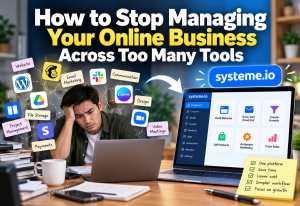
Affiliate Tool + Funnel Builder + Email Platform + Checkout + Spreadsheet + Automation Connector
That is why I would first check whether the platform you already use—or an all-in-one platform you can start inexpensively—can handle the core workflow.
Why Systeme.io Fits This Beginner Checklist Well
Systeme.io is a particularly strong fit for this use case because its current platform combines sales funnels, email marketing, automation, selling tools, contacts, and affiliate management.
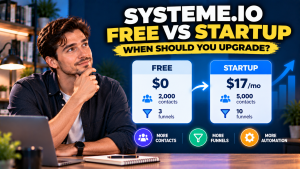
Its official pricing page currently lists the affiliate program as part of the platform across plans. The Free plan currently includes up to 2,000 contacts, three sales funnels, one affiliate program, and one custom domain, with no credit card required.
For a beginner, that means you can build and test the first version of the workflow before deciding whether the business needs a larger paid setup.
The value is not simply “free affiliate software.” It is the fact that many pieces of this checklist can live in the same system.
How the Checklist Maps to Systeme.io
| Beginner Need | Systeme.io Approach |
|---|---|
| Affiliate signup | Create a dedicated opt-in page |
| Identify affiliates | Tag affiliate subscribers |
| Unique tracking | Affiliate ID and affiliate link structure |
| Send unique links | Use the affiliate ID variable in onboarding email |
| Affiliate reporting | Affiliate dashboard access |
| Commission | Configure affiliate commission settings |
| Payout timing | Configure payout delay and program settings |
| Affiliate communication | Email campaigns and automation |
| Sales journey | Funnels and order forms |
| Payout administration | Affiliate invoices plus supported payout workflows |
Systeme.io’s current help documentation specifically recommends a dedicated affiliate opt-in page so affiliates can be tagged. It also supports the {affiliate_id} variable for automatically inserting each person’s affiliate ID into an email and the {affiliate_dashboard} variable for dashboard access.
That enables a simple onboarding workflow:
Affiliate Signup → Affiliate Tag → Welcome Email → Unique Link + Dashboard → Start Promoting
Systeme.io Can Also Reduce Payout Administration
Systeme.io can generate affiliate invoices when the conditions of the program are met and supports payout workflows involving PayPal and Wise.
There is an important limitation to understand: the current official documentation describes these payout integrations as a hybrid process, not a completely hands-off payment system.
For the documented Wise and PayPal flows, invoice generation and transmission can happen automatically, but the program owner still triggers the payment once the invoices reach the appropriate processing status. The PayPal batch workflow also has additional requirements, including PayPal Payouts activation and a minimum number of invoices for the documented batch process.
For a beginner, that is still useful automation because the system can handle much of the commission and invoice administration while you retain control of the actual payout trigger.
Do Not Confuse Your Own Program With the Systeme.io Affiliate Program
This distinction is worth making because beginners often encounter both when researching the platform.
Your own affiliate program: other people promote your product and you decide the program configuration.
The Systeme.io affiliate program: you promote Systeme.io itself under Systeme.io’s own affiliate terms.
The percentages and rules advertised for Systeme.io’s own affiliate program are not automatically the settings you should copy for your own product.
Your program needs economics and terms that fit your business.
Your Minimum Viable Affiliate Program
If the full checklist still feels long, reduce version one to these essentials:
- A proven or sale-ready offer.
- A sustainable commission.
- Clear payout and refund rules.
- An affiliate signup page.
- Unique tracking links.
- An affiliate dashboard or reporting method.
- A short welcome/onboarding email.
- A basic promotional resource kit.
- A complete tracking test.
- A small first group of affiliates.
You can add sophisticated recruitment campaigns, second-tier commissions, advanced source tracking, competitions, and more detailed reporting later.
Final Pre-Launch Check
Before sending your first recruitment invitation, answer these questions with a clear yes:
- Is the product ready to buy?
- Do I know who I want to recruit?
- Is the commission sustainable?
- Are payout timing and refund rules clear?
- Do I understand how attribution works?
- Can an affiliate join without confusion?
- Will they receive the correct unique link?
- Can they access their affiliate dashboard or results?
- Do they know what they are allowed to promote?
- Have I tested an affiliate-attributed purchase?
- Have I checked the actual commission on the offer?
- Do I know how I will process payouts?
If several answers are “no,” fix those before recruitment. It is much easier to correct the system with zero affiliates than with fifty people already promoting it.
Final Takeaway
A beginner affiliate program does not need to be complicated, but it does need to be complete enough that affiliates can join, promote, get credited correctly, understand their commission, and eventually get paid.
Build the offer and economics first. Then prepare the signup, tracking, rules, onboarding, resources, testing, and payout workflow.
Once you see how many of those pieces need to work together, the advantage of an integrated platform becomes clearer. Systeme.io is a strong beginner option because affiliate management can sit alongside the funnel, order form, contacts, email, and automation instead of becoming another disconnected software subscription.
Start small, test the full journey yourself, and improve the program from real affiliate activity rather than trying to design an enterprise system before your first partner joins.
Suggested Articles to Read
 Systeme.io Free vs Startup: When Should You Upgrade in 2026?
 How to Stop Managing Your Online Business Across Too Many Tools
 How to Organize Leads So You Don’t Forget Who to Follow Up With
 How to Build a Landing Page and Affiliate Program Using One Platform
 How to Manage Sales Leads Without a Spreadsheet